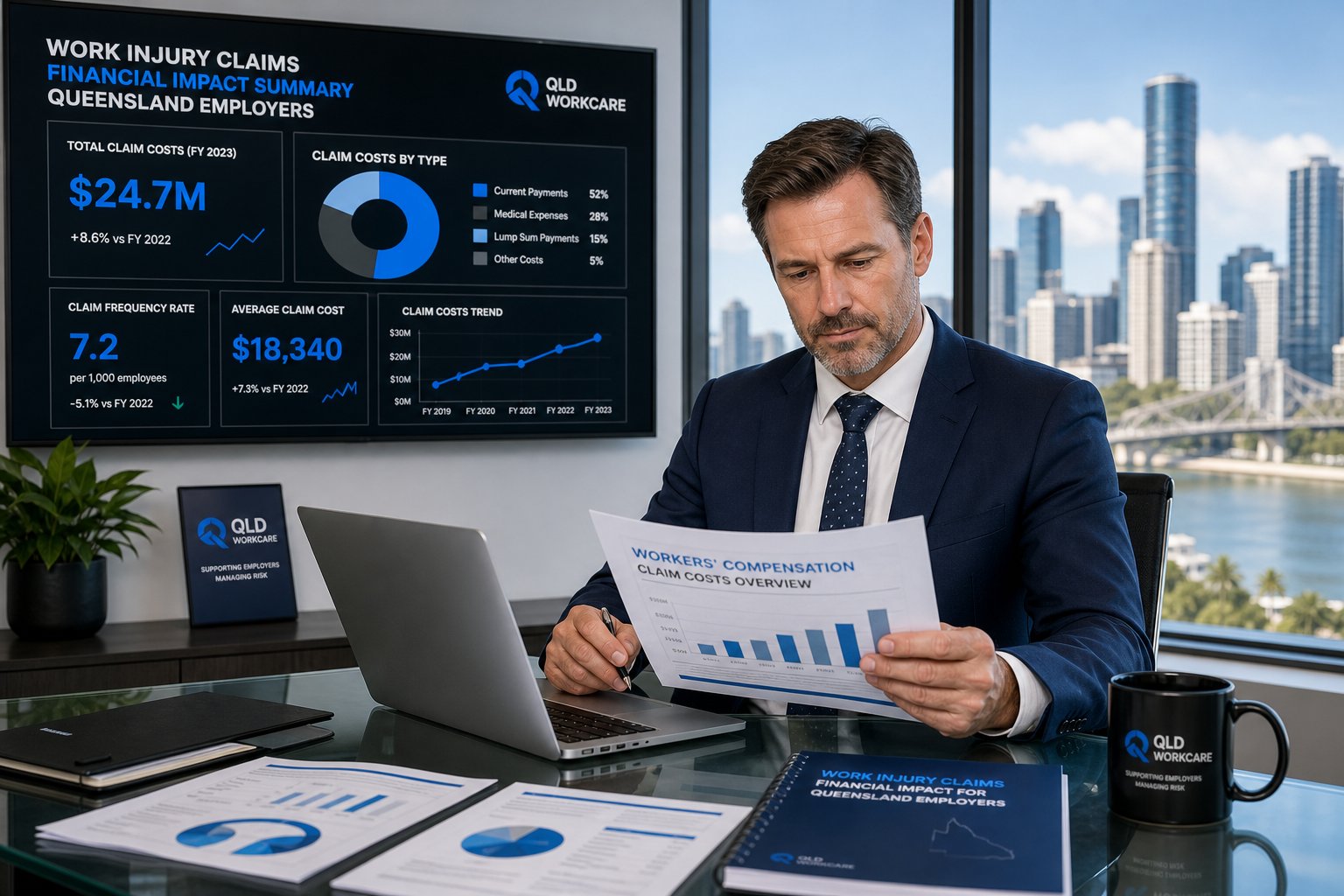
Workplace injuries are something no employer wants to deal with, but the reality is they happen across every industry in Queensland. When they do, the financial and legal consequences for a business can be significant, and many employers are caught off guard simply because they did not have a clear picture of what a claim actually involves.
This article breaks down how much a work injury claim can cost in Queensland, what drives those costs up or down, and what employers need to understand to manage their obligations properly.
The Real Cost of a Workplace Injury Claim
When most employers think about the cost of a work injury claim, they think about WorkCover premiums. But the financial impact goes well beyond that.
The direct costs include medical expenses, rehabilitation and return-to-work support, income replacement payments while the worker recovers, and legal costs if the matter becomes disputed. These are the visible costs that show up in paperwork and invoices.
The indirect costs are often just as significant. Lost productivity, training replacement staff, reduced team morale, and the time spent managing the claims process internally all add up quickly. For small and medium businesses especially, these hidden costs can be more damaging than the direct ones.
WorkCover Premiums and How They Are Calculated
Every Queensland employer is required to hold WorkCover insurance unless they are a self-insurer. The premium you pay is based on your industry classification, your total wages bill, and your claims history.
If your business has had multiple claims or a particularly costly claim in the past, your premium will reflect that. WorkCover Queensland uses an experience rating system that rewards businesses with strong safety records and penalises those with higher claim rates. Over time, a pattern of workplace injuries can significantly increase what you pay each year.
This is one of the clearest financial incentives for employers to invest in workplace safety rather than treat it as a compliance exercise.
Common Law Claims and Why They Cost More
A standard WorkCover claim covers the immediate costs associated with a worker’s injury. But if the injury was caused by employer negligence, the worker may also be eligible to pursue a common law damages claim, and this is where costs can escalate considerably.
Common law claims can include compensation for pain and suffering, loss of enjoyment of life, past and future medical expenses, and loss of future earning capacity. For serious injuries, the total value of a common law claim can reach hundreds of thousands of dollars or more.
Understanding how much a work injury claim can cost in Queensland under a common law pathway is something every employer should discuss with their legal and insurance advisors before a claim ever arises. Being prepared is far less costly than being reactive.
What Factors Drive the Cost of a Claim Higher
Not all claims cost the same. Several factors can push the value of a claim significantly higher than a baseline estimate.
The severity of the injury is the most obvious one. Injuries that result in permanent impairment, long-term disability, or psychological trauma attract higher compensation than those with a straightforward recovery path.
The worker’s age and income also matter. A younger worker with a high pre-injury salary who is unable to return to their previous role will generally have a higher claim value than an older worker closer to retirement.
Employer conduct during the claims process can also affect costs. Delays in lodging injury reports, failing to provide suitable duties during recovery, or disputing a legitimate claim without proper grounds can all lead to additional legal costs and potential penalties.
Your Obligations as a Queensland Employer
Queensland employers have specific legal obligations when a worker is injured. These include reporting the injury to WorkCover Queensland within the required timeframe, cooperating with the claims process, and making genuine efforts to support the worker’s return to work where it is safe and practical to do so.
Failing to meet these obligations can result in fines, increased claim costs, and reputational damage. It can also expose the business to additional legal action if the worker feels their recovery has been hindered by the employer’s response.
Understanding these obligations in advance and having clear internal processes for managing workplace injuries is one of the most effective ways to control costs when a claim does occur.
Prevention Is Still the Lowest Cost Option
It almost goes without saying, but the most cost-effective approach to work injury claims is reducing the likelihood of injuries occurring in the first place. Regular safety audits, proper training, adequate protective equipment, and a workplace culture that takes safety seriously all contribute to fewer incidents and lower long-term costs.
WorkSafe Queensland provides free resources and guidance for employers looking to improve their safety systems. Investing time in these resources is considerably less expensive than managing a serious injury claim after the fact.
Getting the Right Advice Early
Whether you are an employer trying to understand your exposure or a worker trying to understand what a claim might be worth, getting accurate information early makes the entire process easier to navigate. Speaking with a legal professional who specialises in Queensland workers compensation is the most reliable way to get advice tailored to your specific situation, and for most parties involved, that conversation is well worth having sooner rather than later.